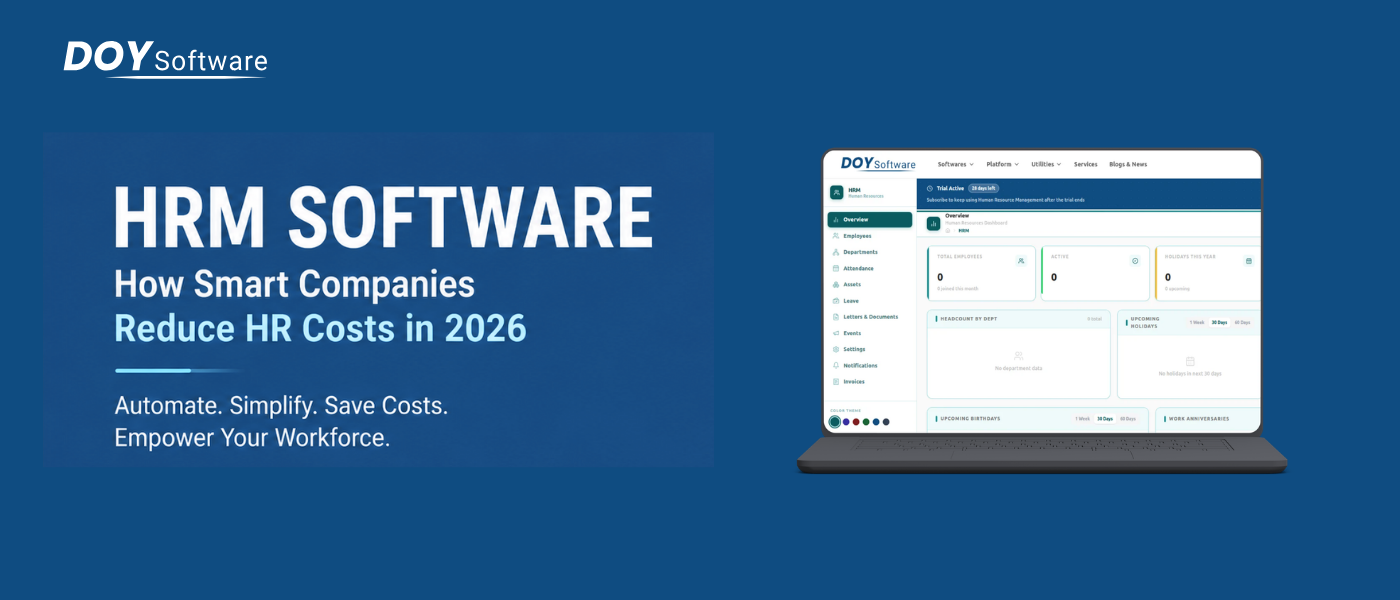
HR Management Software helps businesses automate repetitive HR tasks, improve workforce productivity, reduce payroll errors, and simplify employee management. Instead of spending valuable time on administrative work, HR teams can focus on hiring the right talent, improving employee engagement, and supporting business growth.
Companies across industries—including manufacturing, logistics, healthcare, retail, IT, and professional services—are investing in Human Resource Management Software to streamline operations and build a more efficient workplace.
What Is HRM Software?
HRM Software (Human Resource Management Software) is a centralized digital platform that helps businesses manage every stage of the employee lifecycle. From recruitment and onboarding to payroll, attendance, performance tracking, and employee records, everything is managed from one secure system.
Instead of switching between multiple tools or maintaining paper records, HR professionals can access employee information, automate workflows, and generate reports in just a few clicks.
A modern HRM solution typically includes:
- Employee Database
- Attendance Management
- Leave Management
- Payroll Processing
- Recruitment Management
- Performance Management
- Employee Self-Service Portal
- HR Analytics and Reporting
- Document Management
- Compliance Tracking
10 Smart Ways HRM Software Helps Reduce HR Costs
1. Automates Repetitive HR Tasks
Administrative work often takes up a large portion of an HR team's day. Tasks such as attendance tracking, leave approvals, document updates, and employee record management can all be automated. Automation reduces manual effort, minimizes human error, and allows HR professionals to focus on strategic initiatives rather than routine administration.
2. Reduces Payroll Errors
Payroll accuracy is essential for every business. Modern HRM Software automatically calculates salaries based on attendance, leave balances, overtime, and company policies. This reduces payroll mistakes, improves employee satisfaction, and minimizes the time spent correcting errors. Accurate payroll processing also helps businesses maintain compliance with tax and employment regulations.
3. Improves Attendance Management
Tracking attendance manually becomes increasingly difficult as organizations grow. An integrated attendance management system records:
- Working Hours
- Shift Schedules
- Overtime
- Holidays
- Remote Work Attendance
4. Simplifies Leave Management
Managing leave requests through emails or spreadsheets often causes delays and confusion. With HRM Software, employees can submit leave requests online, managers can approve them instantly, and leave balances update automatically. This creates a faster, more transparent process for everyone involved.
5. Speeds Up Recruitment
Hiring the right employees quickly helps reduce recruitment costs. HRM Software simplifies hiring by allowing businesses to:
- Publish Job Openings
- Track Applicants
- Schedule Interviews
- Store Candidate Information
- Manage Recruitment Workflows
6. Employee Self-Service Saves Valuable Time
Many HR questions are repetitive. Employees regularly request payslips, leave balances, attendance records, and personal information updates. An employee self-service portal allows employees to access this information independently, reducing routine HR inquiries and giving HR teams more time for higher-value work.
7. Better Performance Management
Employee performance directly affects business success. HRM Software helps managers:
- Set Goals
- Conduct Performance Reviews
- Track Employee Progress
- Provide Continuous Feedback
8. Supports Better Compliance
Compliance mistakes can result in financial penalties and legal issues. HRM Software stores employee records securely, maintains audit trails, tracks policy acknowledgements, and generates compliance reports whenever needed.
9. Provides Real-Time Workforce Analytics
Making HR decisions without reliable data often leads to poor planning. Modern HRM Software provides dashboards that display:
- Employee Turnover
- Attendance Trends
- Payroll Costs
- Department Performance
- Leave Patterns
10. Supports Business Growth Without Expanding the HR Team
As organizations grow, HR responsibilities naturally increase. Instead of hiring additional HR staff for administrative work, businesses can automate many routine processes with HRM Software. This enables HR teams to manage a larger workforce efficiently while keeping operational costs under control.
Essential Features Every HRM Software Should Include
Before investing in an HR solution, ensure it offers:
- Employee Management
- Payroll Management
- Attendance Tracking
- Leave Management
- Recruitment Management
- Performance Management
- Employee Self-Service Portal
- Mobile Accessibility
- Workflow Automation
- HR Reports and Analytics
- Document Management
- Role-Based Security
- Cloud Access
- Integration with ERP and Accounting Software
How to Choose the Right HRM Software
Not every HR solution offers the same features. When evaluating HRM Software, consider the following:
- Ease of Use
- Scalability
- Cloud-Based Accessibility
- Security Standards
- Integration Options
- Customer Support
- Customization
- Pricing Transparency
- Regular Software Updates
Conclusion
Managing people effectively is one of the biggest challenges businesses face in 2026. Manual HR processes consume valuable time, increase operational costs, and create unnecessary complexity as organizations grow.
HRM Software helps solve these challenges by automating repetitive tasks, improving payroll accuracy, simplifying attendance management, supporting compliance, and providing valuable workforce insights. Rather than replacing HR professionals, it empowers them to focus on strategic initiatives that drive business success.
Frequently Asked Questions (FAQs)
What is HRM Software?
HRM Software is a digital solution that helps businesses manage employee information, payroll, attendance, leave, recruitment, performance, and other HR processes from a single platform.
How does HRM Software reduce HR costs?
It reduces manual work, minimizes payroll errors, automates repetitive tasks, improves workforce management, and increases overall HR efficiency.
Is HRM Software suitable for small businesses?
Yes. Many HRM solutions are designed specifically for startups and small businesses, allowing them to automate HR processes without hiring a large HR team.