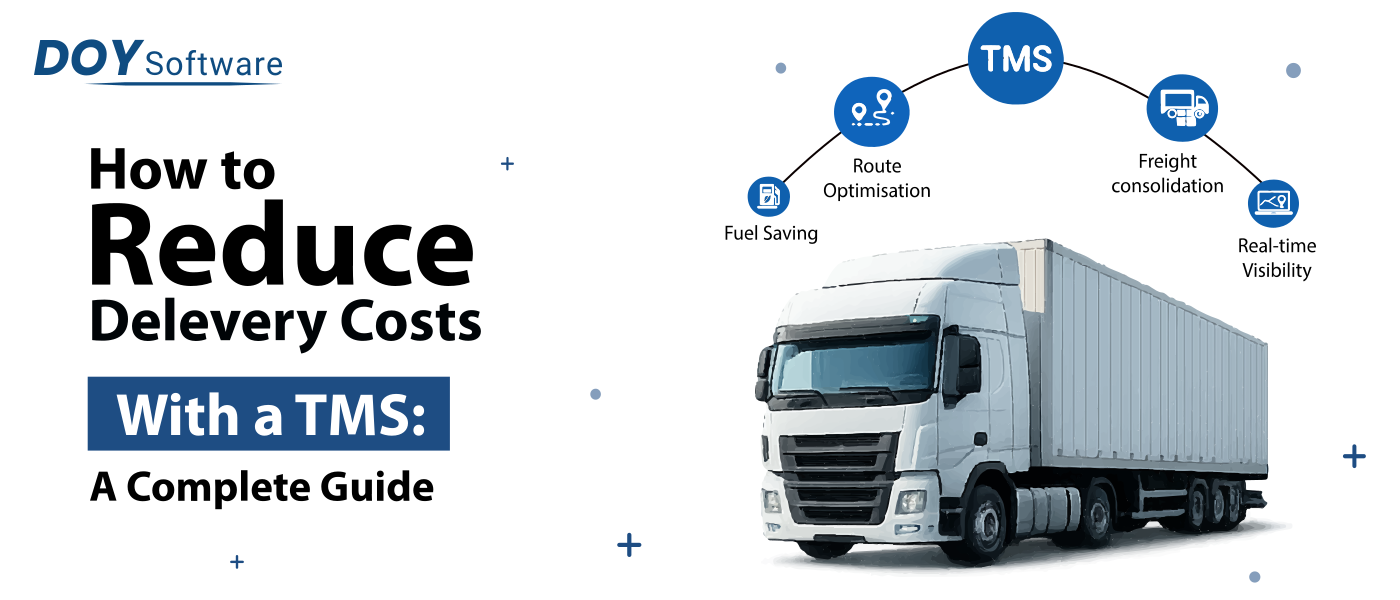
Introduction
Discover how a Transportation Management System (TMS) helps cut delivery costs through smarter routing, carrier selection, real-time tracking, and automation. If you run a fleet, you know how much delivery costs keep rising. Fuel prices swing up, drivers clock more hours, and failed drop-offs burn time and cash. For many businesses, these costs eat straight into profits.
A Transportation Management System (TMS) can flip the script. It gives you smarter routes, real-time tracking, and fewer manual mistakes, so you spend less and move faster. In this guide, we’ll show how a TMS helps cut delivery costs step by step and what to look for when picking one.
What is a transport management system?
Trying to manage a lot of deliveries at once? It's tough. One snag, such as a driver running late or a route change, and your entire strategy goes out the window. Managing everything by hand? That is asking for trouble. This explains why so many businesses utilise a Transportation Management System (TMS).
A TMS keeps things orderly. You can track shipments, plan better routes, and ensure that orders leave warehouses on schedule. It's not about flashy technology. It's about keeping the turmoil under control and assisting your team in working more efficiently.
What are the different delivery costs?
When it comes to fleet management, there are delivery costs associated with it. Here are the different delivery costs of running a fleet:
1. Fuel costs
Fuel prices are among the highest in delivery. Fuel consumption varies due to factors such as oil markets, taxes, and local supply concerns. As a result, costs may fluctuate. Poor route selections, stop-and-go driving, and idling engines consume gasoline. Even sending out a half-filled truck, space costs nearly as much as a full load. Every day, these minor mistakes eat away at profits. What is the fix? Smarter routes. Regular car inspections.
2. Vehicle maintenance and depreciation
Maintaining delivery trucks incurs high costs. Oil changes, brake pads, tyre replacements—you name it, it adds up. What happens when a truck breaks down? That is a double hit. You're paying for maintenance while wasting time and missing deliveries. In some circumstances, you could potentially lose consumers.
Then there is depreciation. Every mile off the odometer reduces a vehicle's value. Even trucks that do not break down eventually wear out. Older models tend to consume more gasoline and require more regular maintenance. Keeping them on the road eventually becomes more expensive than it is worthwhile.
3. Carrier and shipping fees
Working with a third-party carrier? It's not inexpensive. Rates are determined on distance, weight, and how quickly you need the cargo delivered. And what about hurried jobs or odd-sized loads? They'll cost much more. So, what is the next move? Begin with relationships.
4. Warehousing and handling charges
Warehousing is more than just having space to store items. There are numerous hidden expenditures, including rent, power, insurance, security, and, of course, the workers who keep things running. Then there is handling. Each time an item is picked, packaged, or moved, you pay a fee. These simple actions may appear insignificant, but believe me, they build up.
5. Insurance and compliance costs
Insurance is a cost that cannot be avoided. Trucks, goods, and warehouses require covering. Premiums vary, but they tend to increase year after year. Accidents, theft, or even a single claim can raise rates dramatically.
Sometimes you're paying too much for coverage that you don't need. Many businesses invest in compliance software to help them track requirements and avoid mistakes. Training employees on safety and laws also pays off, because preventing accidents is always cheaper than cleaning up after them.
6. Last-mile delivery expenses
The final mile is where things become quite pricey. Getting a box from a hub to someone's doorstep may appear simple, but it isn't. Traffic bottlenecks, lost deliveries, and short time frames all increase costs. And what about today, when customers expect same-day or even two-hour delivery?
The pressure to go quicker is enormous, as is the price tag. It's considerably more challenging in rural places. Drivers frequently travel long distances with only one or two stops. This uses more gasoline and wastes time. Additionally, stop-and-go driving causes extra wear and tear on vehicles.
How a TMS helps reduce the different delivery costs
Step 1: Optimize your delivery routes with TMS
So, first up? Smarter routing. A TMS isn't simply for spitting out directions. It's as if your logistics brain is on steroids. It analyses real-time traffic, weather delays, delivery windows, and other factors to determine the quickest and cleanest way to do tasks.
Here’s what you need to do:
- Get your data in – Customer addresses, drop-off times, truck capacity, driver shifts. All of it. Garbage in, garbage out, right?
- Switch on live updates – Traffic jams? Storm rolling in? Your TMS will reroute drivers mid-trip so they’re not wasting time or gas.
- Cluster your stops smartly – Stop zig-zagging across town like a pizza guy. Group deliveries in the same area to save miles.
- Keep tweaking – Run reports weekly. If you see delays or weird detours, adjust and test again.
Step 2: Compare carriers and manage rates smartly
Now that your routes are tight, let's speak about shipping partners. Choosing the correct carrier entails more than simply accepting the first estimate you receive. A TMS provides you with visibility into all of your options, so use it to compare prices and save money.
Here’s how to handle it:
- Now that your routes are tight, let's speak about shipping partners. Choosing the correct carrier entails more than simply accepting the first estimate you receive. A TMS provides you with visibility into all of your options, so use it to compare prices and save money.
- Watch for hidden fees – Fuel surcharges, residential delivery fees, weekend rates… they creep in. Spot them early so you’re not surprised later.
- Negotiate wisely – You must have prices from various carriers, use this to your advantage, and push for better terms with your preferred carriers.
- Keep the options open – It is wise not to stick to one provider. You can use national carriers for deliveries across the country and regional ones for local deliveries.
Step 3: Automate scheduling and dispatch
Throw out the spreadsheets. Stop calling drivers one by one. Let the TMS handle it. Automation means fewer screw-ups, faster turnarounds, and zero overtime surprises.
- Set it and forget it – Enter jobs, and the system schedules drivers, routes, and loading slots for you.
- No more bottlenecks – Trucks aren’t waiting around for paperwork or loading instructions.
- Slash overtime costs – Smarter plans keep shifts inside regular hours.
- Instant reshuffles – Sick calls or breakdowns? The TMS reassigns tasks without skipping a beat.
Step 4: Boost visibility and tracking
If you can’t see where your trucks are, you’re guessing. And guessing costs money. Delays pile up. Customers get frustrated.
A TMS stops all that by showing you what’s happening in real time.
- Live map view – Know exactly where each driver is. See which deliveries are done, which are late, and who’s stuck in traffic.
- Jump on problems fast – If a driver falls behind, reroute or send a heads-up to the customer before it’s too late.
- Fewer missed stops – Customers get live ETAs. They’re more likely to be home, so your driver doesn’t waste a trip.
- Protect goods in transit – Alerts flag odd route changes or long stops, helping prevent theft or spoilage.
Step 5: Use analytics and reporting to uncover hidden costs
You can’t fix what you don’t see. A TMS gives you reports that show exactly where your money is leaking. It’s like having a flashlight in a dark warehouse, you suddenly spot all the waste.
- Track key metrics – Fuel usage, driver hours, delivery times, failed drops, these numbers tell the truth.
- Find patterns fast – Ask yourself Are certain routes always late? Are some vehicles guzzling more fuel?
- Act on the insights – By using insights from reports you can fix problems. This can be anything like swapping old trucks, changing delivery windows and rerouting for fewer delays.
- Benchmark performance – Compare your fleet over time or against industry averages to see how you’re doing.
Step 6: Automate freight auditing and payments
Going line by line on freight bills? It’s a slow grind. Hidden charges and double-billing can easily slip past. A TMS keeps an eye on these for you and stops the leaks.
Step 7: Improve driver performance with training
You can have the best TMS in the world, but here’s the thing, if your drivers aren’t using it properly, you’ll still bleed money. Think about it. All that tech won’t stop them from idling too long, burning through fuel, or skipping safety steps unless they’re trained right.