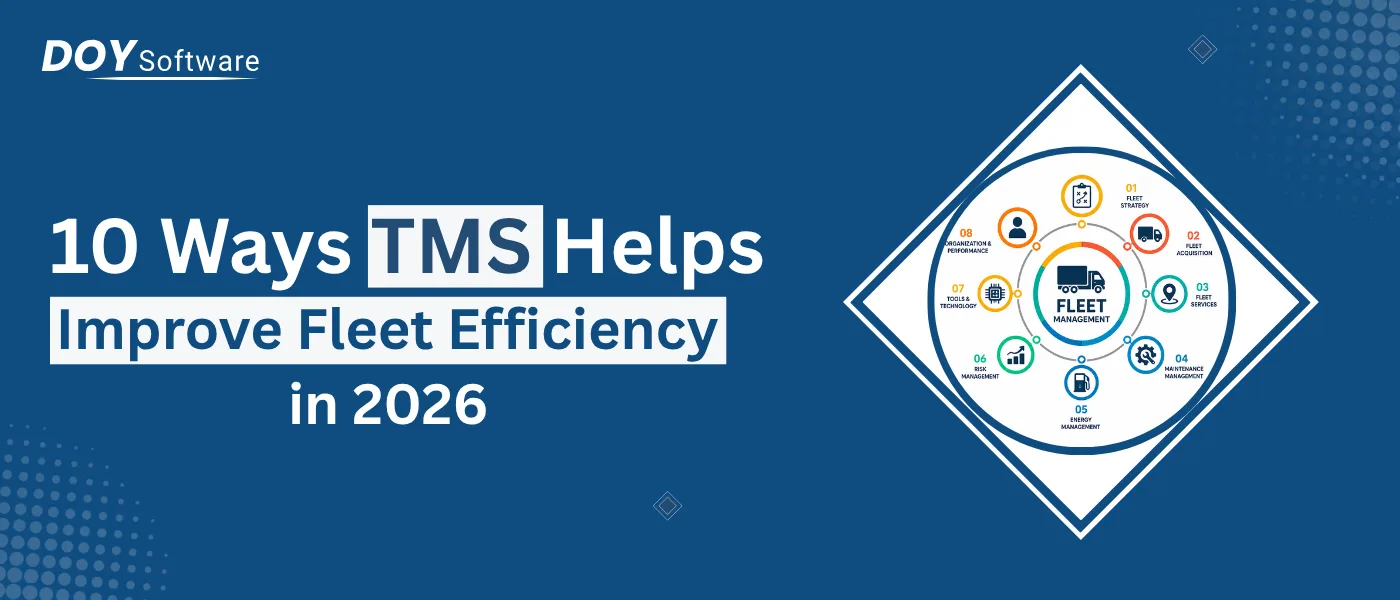
Transportation Management Systems (TMS) are becoming essential for fleets that want to cut costs, improve visibility, and stay competitive in 2026. With fleets shifting toward data-driven decisions, flexible operations, and stronger automation, a well-built TMS can improve efficiency across routing, fuel, compliance, and planning.
Introduction
Fleet managers in 2026 are under pressure from rising costs, tighter service expectations, and the need to do more with fewer assets. Current fleet trends emphasize utilization, connected data, automation, and unified platforms, which makes TMS adoption especially relevant this year.
1. Optimizes Route Planning
A TMS helps fleets choose faster and more efficient routes, which reduces empty miles, idle time, and fuel waste. Route optimization also improves ETA accuracy and helps drivers complete more deliveries without increasing fleet size.
2. Improves Vehicle Utilization
One of the biggest efficiency gains from TMS is better asset use. In 2026, fleets are focusing more on utilization than expansion, and a TMS helps dispatchers assign the right vehicle to the right load at the right time.
3. Reduces Fuel Costs
Fuel spend is one of the most visible operating expenses in fleet management, and TMS software helps monitor and control it. By combining route data, mileage, and delivery schedules, fleets can reduce unnecessary fuel burn and identify costly inefficiencies.
4. Centralizes Operational Data
A modern TMS brings shipment, driver, route, and carrier data into one system. That centralized view makes it easier to spot delays, compare performance, and make faster decisions without switching between disconnected tools.
5. Strengthens Real-Time Visibility
Real-time tracking is now a core expectation for fleet operations. A TMS improves visibility into shipment status and vehicle movement, helping managers respond quickly to delays, reroute vehicles, and keep customers informed.
6. Supports Predictive Maintenance
When a TMS connects with telematics or fleet data sources, managers can use usage patterns to schedule maintenance earlier and reduce breakdown risk. This supports a more reliable fleet and helps avoid costly downtime.
7. Improves Compliance Workflows
Compliance is easier when records, logs, and delivery documents are managed digitally on a single platform. A TMS can reduce manual paperwork, improve audit readiness, and help fleets maintain better operational discipline.
8. Enhances Driver Coordination
A TMS improves communication between dispatchers and drivers by keeping instructions, updates, and route changes in one place. This reduces confusion, improves response time, and helps drivers stay focused on execution rather than administrative tasks.
9. Enables Better Forecasting
With stronger reporting and historical data, fleets can forecast demand, plan capacity, and avoid overcommitting resources. This is important in 2026 because fleets are placing more value on data quality, resilience, and flexible planning.
10. Increases Customer Satisfaction
A TMS helps fleets deliver more accurate ETAs, fewer delays, and better shipment visibility. That improves customer trust, which matters even more in a market where service quality is tied directly to operational efficiency.
Conclusion
As fleet operations become more complex, Transportation Management Systems continue to play a critical role in improving efficiency, reducing operating costs, and enhancing service quality. From smarter route planning and real-time visibility to predictive maintenance and better customer experiences, a modern TMS equips businesses with the tools needed to stay competitive in 2026. Investing in the right TMS is no longer optional—it's a strategic move toward smarter, more efficient fleet management.